
Where Can You Learn the Manchu Language Today?
Manchu Language Courses at Harvard, Chinese Universities, and Cultural Organizations
MING YE
10/9/20264 min read
Although Manchu is now a critically endangered language, it has not completely disappeared from modern education.
Today, Manchu language and script are still studied and taught in China and abroad.
However, an important distinction must be made: an institution's involvement in Manchu teaching does not necessarily mean that it offers regularly scheduled courses open to the public. Similarly, the ability to teach written Manchu does not necessarily imply the ability to provide comprehensive training in spoken Manchu.
Modern Manchu education is primarily associated with universities, historical and linguistic research institutions, and certain cultural education programs with identifiable organizational backgrounds.
Unlike widely spoken languages such as English or Chinese, Manchu is generally taught on a relatively small scale. Courses may not be offered every academic year.
Why Do Universities Outside China Still Teach Manchu?
Overseas Manchu-language education is closely connected to Qing dynasty history, East Asian studies, historical linguistics, and the study of archival documents.
The Qing dynasty left behind an extensive collection of Manchu-language records covering the imperial household, the Eight Banners, military affairs, diplomacy, frontier administration, and social life.
For scholars studying Qing history, knowledge of written Manchu provides access to original historical sources without relying entirely on Chinese-language translations.
As a result, some universities outside China have maintained Manchu language instruction as part of their training in Qing history and Inner Asian studies.
One notable example is Harvard University in the United States.
Harvard has offered Manchu-language courses associated with its East Asian studies programs. Its course materials have included introductory Manchu grammar, intermediate textual reading, and advanced work with historical documents.
These courses illustrate how Manchu continues to serve as an important research language within academic institutions.
However, the availability of individual courses may change between academic years.
Readers interested in studying Manchu at Harvard should consult the university's official course information for current offerings and enrollment requirements.
Such academic instruction generally emphasizes the Manchu writing system, grammar, historical vocabulary, and the interpretation of written sources rather than everyday conversational fluency.
Manchu Language Education at Chinese Universities and Research Institutions
In China, Manchu-language education has close connections with Qing archival studies, historical linguistics, ethnic-language research, and the interpretation of historical documents.
Some universities and research institutions provide specialized instruction through academic courses, graduate-level training, and research seminars.
The principal purpose of this instruction is often to prepare researchers to read and analyze original Manchu-language materials.
This remains particularly important for Qing history because certain historical records contain information that cannot be fully understood through Chinese-language sources alone.
However, specialized academic instruction should not be confused with publicly accessible language classes.
A university may support Manchu-language research or provide training for enrolled students without offering regular Manchu courses to the general public.
The availability and structure of such programs therefore need to be confirmed individually.
Manchu Script Academies and Manchu Cultural Associations
Beyond universities and formal research institutions, Manchu teaching has also been associated with cultural education organizations and community associations.
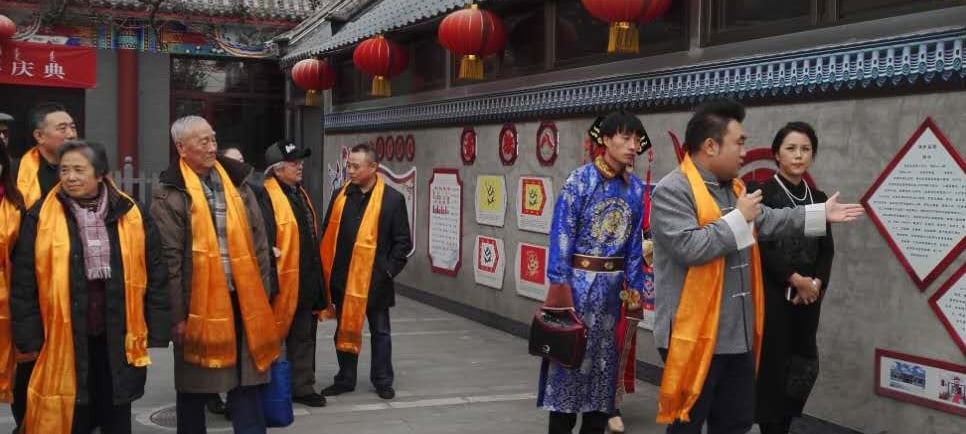
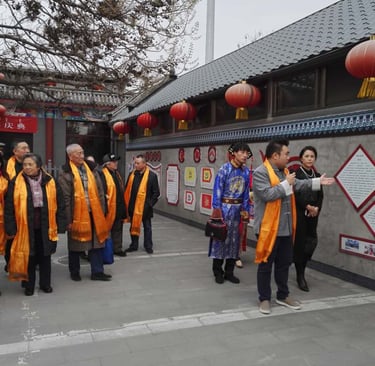
Historical initiatives operating under names such as Manchu script academies (Manwen Shuyuan, 满文书院), together with Manchu-language learning activities organized or supported by Manchu cultural associations in cities such as Shenyang and Harbin, represent another approach to cultural transmission.
These activities have differed from university-level academic instruction.
Depending on their objectives, they may have introduced the Manchu alphabet, basic vocabulary, traditional culture, or historical knowledge.
Their significance lies in demonstrating that interest in Manchu education has not been confined exclusively to professional historians and linguists.
However, the fact that an organization previously conducted Manchu-language activities does not establish that it continues to offer classes today.
Current teaching schedules, public enrollment opportunities, and course availability should be confirmed through information published by the organizations concerned.
What Is the Difference Between Learning Manchu Script and Speaking Manchu?
Modern Manchu education involves several distinct levels of linguistic competence.
The first is script literacy: recognizing Manchu letters and understanding the principles of spelling.
The second is linguistic knowledge, including vocabulary, grammar, and sentence structure.
A more specialized level involves reading historical Manchu documents and understanding the administrative terminology and writing conventions of particular periods.
Another important skill is spoken proficiency, which includes understanding naturally spoken Manchu and participating in sustained conversations.
These abilities are related, but they are not interchangeable.
A Qing historian may be highly skilled at reading Manchu archival documents without regularly speaking Manchu in everyday conversation.
A beginner may be able to write Manchu letters while still being unable to understand complete sentences independently.
Similarly, knowledge of Manchu calligraphy does not necessarily demonstrate comprehensive proficiency in the language.
For this reason, Manchu-language teaching should be evaluated according to its stated objectives and actual instructional content rather than the name of a course or institution alone.
Does Teaching Manchu Mean the Language Is Being Revived?
The continued existence of Manchu-language education demonstrates that the language retains academic and cultural significance.
However, teaching activities alone do not prove that Manchu has been restored as a widely used language of everyday life.
Language research, script education, and natural transmission between generations are different processes.
Research and formal instruction can continue through universities, academic institutions, and individual study.
Natural intergenerational transmission, however, requires sustained language use within families and communities, together with opportunities for children to acquire Manchu through everyday interaction.
For this reason, modern Manchu teaching should be understood as an important contribution to language preservation and the transmission of knowledge.
It should not automatically be equated with the complete revitalization of Manchu as a living community language.
So, Where Can You Study Manchu Today?
The answer is that opportunities still exist, although they are limited.
Some universities outside China maintain traditions of Manchu-language instruction and research. Harvard University provides a notable example of Manchu being taught in connection with historical and textual scholarship.
In China, certain universities and research institutions continue to support specialized training related to Manchu language and historical documents.
Historical educational initiatives associated with Manchu script academies and Manchu cultural associations in cities such as Shenyang and Harbin also demonstrate that Manchu teaching has existed beyond the formal university system.
However, whether a particular course is currently available, open to the public, subject to tuition fees, or restricted to enrolled university students must be verified separately.
Manchu has not disappeared from modern education, but opportunities to study it remain relatively limited and often specialized.
For anyone interested in learning Manchu, the most important first step is to identify the intended goal.
Is the objective to recognize and write Manchu script?
To read Qing dynasty archival documents?
Or to develop practical spoken Manchu proficiency?
Different goals require different learning materials, instructional expertise, and methods of training.
The continued teaching of Manchu demonstrates that the language remains relevant to historical scholarship and cultural knowledge.
But the long-term future of Manchu as a spoken language depends on more than the existence of courses.
It ultimately depends on whether people have opportunities to use the language meaningfully and consistently in everyday life.
— MING YE