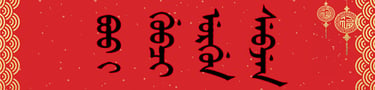
Did You Know That Manchu Has Thirty-Two Seal-Script Styles?
Did You Know That Manchu Has Thirty-Two Seal-Script Styles?
MING YE
9/24/20262 min read


Did You Know That Manchu Has Thirty-Two Seal-Script Styles?
The language and writing system of the Manchu people is known as Manchu. What is less widely known is that Manchu also developed a distinctive tradition of seal-script calligraphy, comprising as many as thirty-two different styles.
Manchu seal-script forms were created in the thirteenth year of the Qianlong reign (1748). The thirty-two styles are:
Yuzhu Seal Script (玉箸篆), Qizi (奇字), Large Seal Script (大篆), Small Seal Script (小篆), Shangfang Large Seal Script (尚方大篆), Fen Script (坟书), Sui Script (穗书), Willow-Leaf Seal Script (柳叶篆), Inverted-Chive Seal Script (倒韭篆), Zhuansu Seal Script (转宿篆), Zhiying Seal Script (芝英篆), Biluo Seal Script (碧落篆), Hanging-Dew Seal Script (垂露篆), Dragon Seal Script (龙篆), Hanging-Cloud Seal Script (垂云篆), Tadpole Script (蝌蚪书), Bird-Track Seal Script (鸟迹篆), Carved-Insect Seal Script (雕虫篆), Qilin Script (麟书), Swan-Head Seal Script (鹄头篆), Bird Script (鸟书), Luan-and-Phoenix Seal Script (鸾凤篆), Turtle Script (龟书), Dragon-Claw Seal Script (龙爪篆), Scissors Seal Script (剪刀篆), Yingluo Seal Script (缨络篆), Hanging-Needle Seal Script (悬针篆), Shu Seal Script (殳篆), Gold-Inlaid Seal Script (金错篆), Inscribed-Tally Seal Script (刻符篆), Flying-White Script (飞白书), and Bell-and-Tripod Seal Script (钟鼎篆).
Among these thirty-two styles, ten were used on official seals ranging from those of the emperor to those of officials at various levels of the Qing administration:
Yuzhu, Zhiying, Shangfang Large Seal, Willow-Leaf, Small Seal, Shu, Bell-and-Tripod, Hanging-Dew, Hanging-Needle, and Zhuansu Seal Scripts.
Beginning in the fourteenth year of the Qianlong reign, the Manchu regular-script forms previously used on official seals throughout the empire were gradually replaced by Manchu seal-script forms. The process took approximately three and a half years and was completed by the seventeenth year of the Qianlong reign.
The following ten styles were among the most commonly used forms of Manchu seal script on the seals of Qing emperors and officials at different levels.
1. Manchu Yuzhu Seal Script (玉箸篆)
Yuzhu literally refers to “jade chopsticks,” an allusion to the script's slender, even, and regular strokes.
In the Qing dynasty, Manchu Yuzhu Seal Script was reserved for the imperial seals of emperors, empresses, and imperial consorts.
2. Manchu Zhiying Seal Script (芝英篆)
Zhiying Seal Script was used for the seals of imperial princes and the kings of Korea (Joseon).
3. Manchu Shangfang Large Seal Script (尚方大篆)
Shangfang Large Seal Script was used for the King of Ryukyu, as well as institutions and offices such as the Imperial Clan Court (Zongrenfu), the Duke Yansheng, and the Grand Council (Junjichu).
4. Manchu Willow-Leaf Seal Script (柳叶篆)
Willow-Leaf Seal Script was used on the seals of senior military officials, including generals and regional commanders (zongbing).
5. Manchu Small Seal Script (小篆)
Manchu Small Seal Script was used by institutions including the Fengtian Prefecture, Shuntian Prefecture, the Imperial Armory (Wubeiyuan), and provincial administrative commissions (Chengxuan Buzhengshi Si).
6. Manchu Shu Seal Script (殳篆)
Shu Seal Script was used by officials including pastoral superintendents of the Eight Banners, city defense commandants, Pacification Commissioners, commanders, regimental commanders, and assistant commanders, among others.
7. Manchu Bell-and-Tripod Seal Script (钟鼎篆)
Bell-and-Tripod Seal Script was used by institutions including the Imperial Academy (Guozijian), the Left and Right Offices of the Imperial Clan Court, and the Imperial Medical Academy (Taiyiyuan).
8. Manchu Hanging-Dew Seal Script (垂露篆)
Hanging-Dew Seal Script was used by various prefectural and county-level authorities, particularly certain offices of comparatively higher administrative rank.
9. Manchu Hanging-Needle Seal Script (悬针篆)
Hanging-Needle Seal Script was used for the seals of hereditary native chiliarchs and centurions (tu qianhu and tu baihu), Eight Banner company commanders (niru i janggin / 佐领), clan heads of the imperial lineage and Gioro clans, certain county officials, and officials responsible for frontier gates, among others.
10. Manchu Zhuansu Seal Script (转宿篆)
Zhuansu Seal Script was used in connection with Lama bandi in Beijing and Shengjing, as well as religious titles and offices such as State Preceptors (guoshi) and Chan masters, among others.